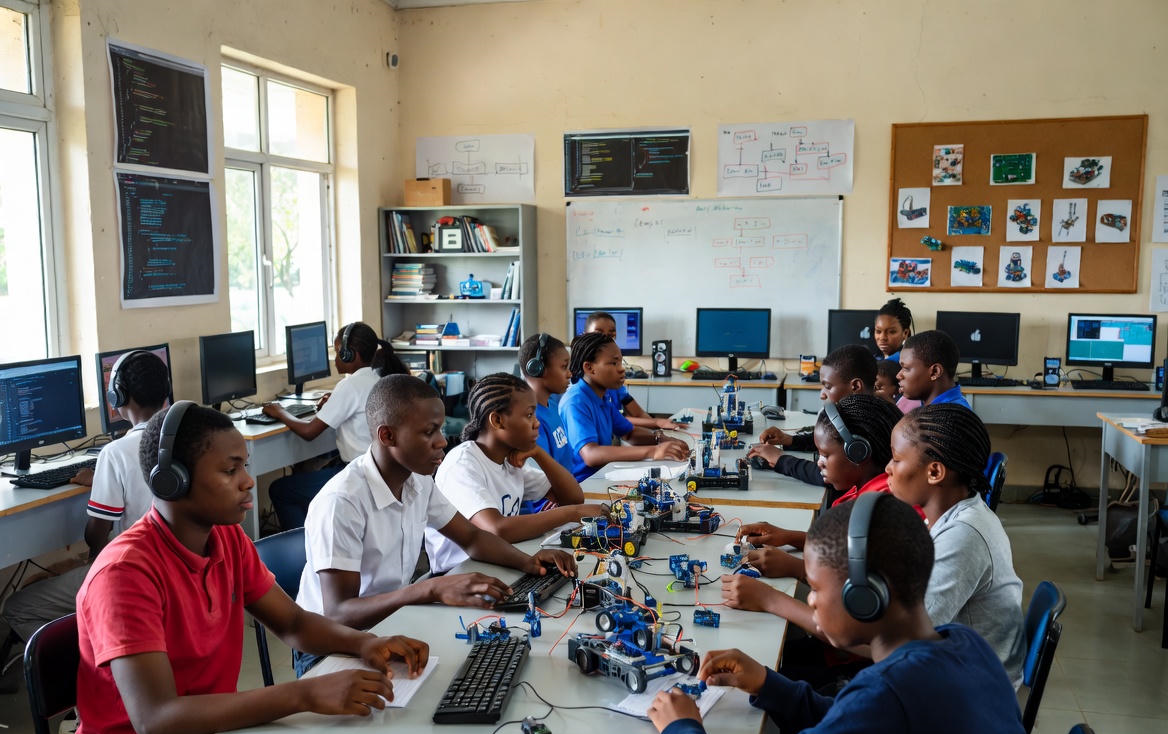
In recent years, Nigeria has witnessed a significant shift in its educational landscape, particularly in the fields of robotics and coding. This transformation is largely driven by women in technology who are spearheading initiatives aimed at equipping students with essential skills for the digital age.
The integration of robotics and coding into the curriculum is seen as a crucial step in modernizing Nigeria’s education system, which has faced numerous challenges, including outdated teaching methods and a lack of resources. By introducing these subjects at an early age, educators aim to foster critical thinking, problem-solving skills, and creativity among students.
Organizations and tech hubs across the country have begun offering workshops and classes focused on robotics and coding, targeting both primary and secondary school students. These programs not only teach technical skills but also encourage teamwork and collaboration, which are vital in today’s workforce.

One notable initiative is the ‘Girls in Tech’ program, which aims to empower young girls by providing them with access to technology education. The program has seen a growing number of female participants, who are increasingly interested in pursuing careers in STEM (Science, Technology, Engineering, and Mathematics).
According to a recent report, women make up only a small percentage of the tech workforce in Nigeria. However, initiatives like ‘Girls in Tech’ are working to change this narrative by inspiring the next generation of female leaders in technology.
In addition to coding and robotics, these programs often include mentorship opportunities, where experienced women in the tech industry guide and support young girls in their educational journeys. This mentorship is crucial in helping to build confidence and resilience among participants, enabling them to navigate the challenges of pursuing a career in a traditionally male-dominated field.
The impact of these educational initiatives is already being felt across the country. Schools that have adopted robotics and coding into their curricula report increased student engagement and enthusiasm for learning. Teachers have noted that students are more motivated to participate in class and are developing a deeper understanding of complex concepts.
Furthermore, the rise of tech competitions and hackathons has provided students with platforms to showcase their skills and creativity. These events not only highlight the talent within Nigeria but also attract the attention of potential employers and investors, further fueling the growth of the tech ecosystem.
Despite the progress, challenges remain. Many schools still lack the necessary infrastructure and resources to effectively implement robotics and coding programs. Additionally, there is a need for more trained educators who can teach these subjects effectively.
To address these issues, stakeholders, including government agencies, non-profits, and private sector players, are being called upon to invest in educational technology and teacher training. Collaborative efforts are essential to ensure that all students, regardless of their background, have access to quality education in technology.
As Nigeria continues to embrace the digital revolution, the role of women in technology will be pivotal in shaping the future of the country’s education system. By empowering young girls and providing them with the skills they need to succeed, these initiatives are not only transforming individual lives but also contributing to the broader goal of national development.
In conclusion, the integration of robotics and coding into Nigeria’s education system, led by women in technology, represents a significant step towards creating a more inclusive and innovative future for the country.